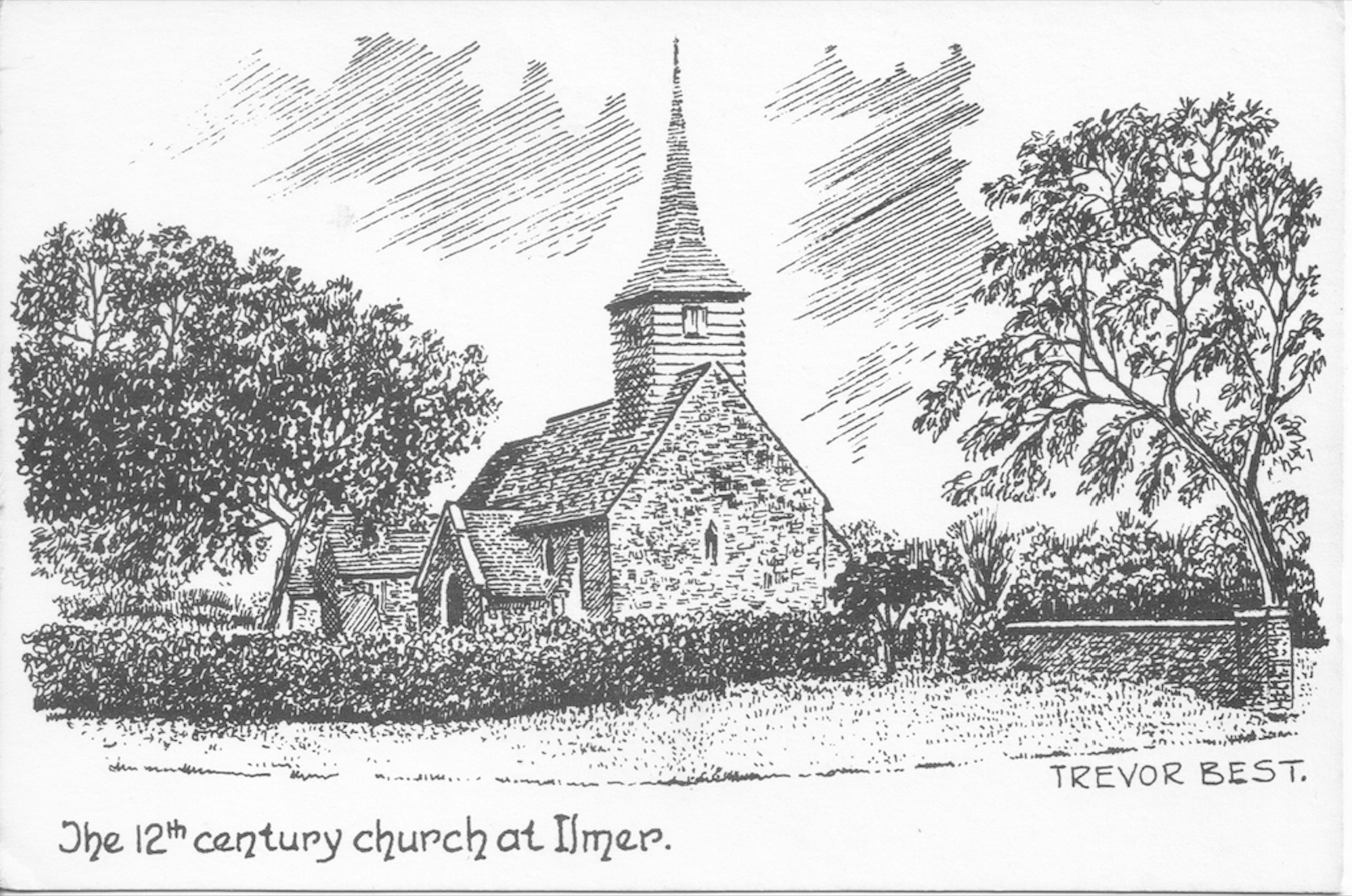
St Peter's
12th century church in Ilmer, Buckinghamshire, England
Title image: A view of Ilmer Church on a postcard
Church History
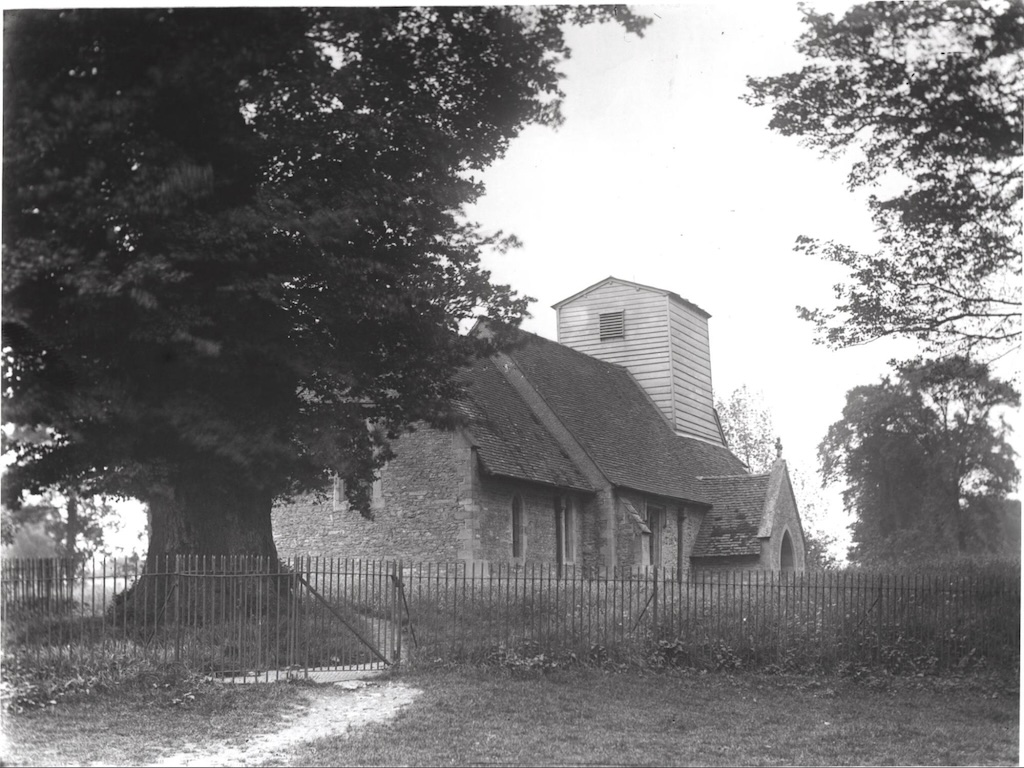 Ilmer Church without spire[1]
For many years, St. Peter's in Ilmer lacked a spire, featuring instead a simple wooden belfry that housed three bells, cast around 1500, 1586, and 1618. The oldest bell bears the Latin inscription "Sancta Margareta ora pro nobis," which translates to "St. Margaret, pray for us." It was likely produced by William Hasylwood at his foundry in Reading. Hasylwood was active in bell casting for a period of 15 years, starting in 1494 and culminating in 1509 with his final known work—the oldest bell hanging in St. Nicholas, Chearsley. The three bells in St. Peter's have diameters of approximately 36 inches, 33 inches, and 31 inches, respectively, corresponding to the chronological order of their casting.
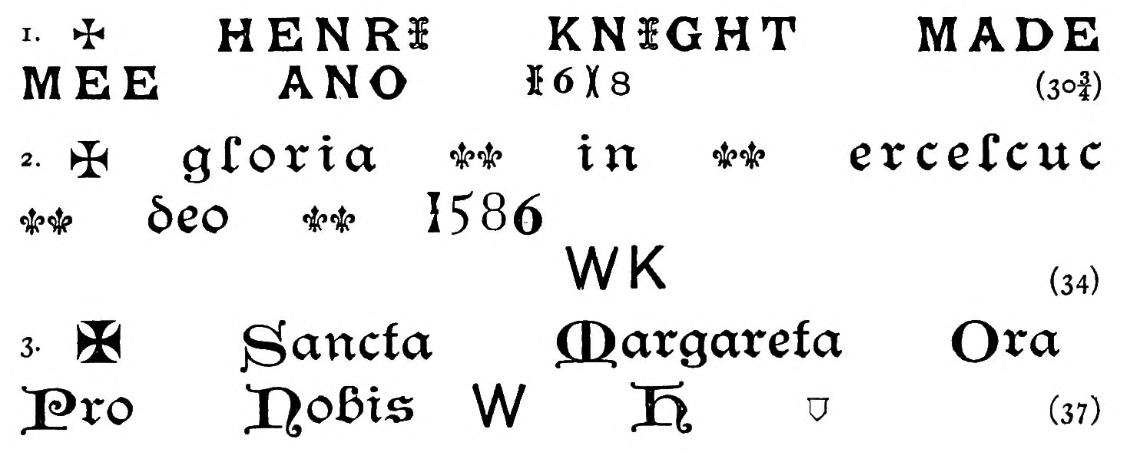 Church bell inscriptions[2]
During the reformation, the Edwardian Inventory of 23rd July 1552 included two further bells - a handbell and a Saunse bell, which would have been located outside the church on the Western gable.
Chancel restoration
By the mid-19th century, the church had fallen into disrepair. In 1850, the Oxford Diocese appointed the ecclesiastical architect George Edmund Street, who would go on to build or renovate 113 churches across the diocese. St. Peter's, overseen by Reverend William Edwards Partridge since 1833, was among these projects and was described as 'dilapidated' in a letter to the Bucks Herald five decades later. At that time, it was remembered that the congregation would wear strongly scented herbs and flowers to counteract the musty odours inside the church, which had an interior of high pews and benches. Street completely rebuilt the chancel and restored the nave between 1859 and 1860. During this renovation, a Tudor-origin rood screen, which separated the chancel from the nave, was found to be supporting the roof with farm hurdles[3]. The church was reopened on Thursday, 30th August 1860, by Bishop Samuel Wilberforce, the son of William Wilberforce, exactly two months after the bishop's notable participation in an Oxford debate. In this debate, Bishop Wilberforce had vigorously challenged Darwin's theory of evolution.
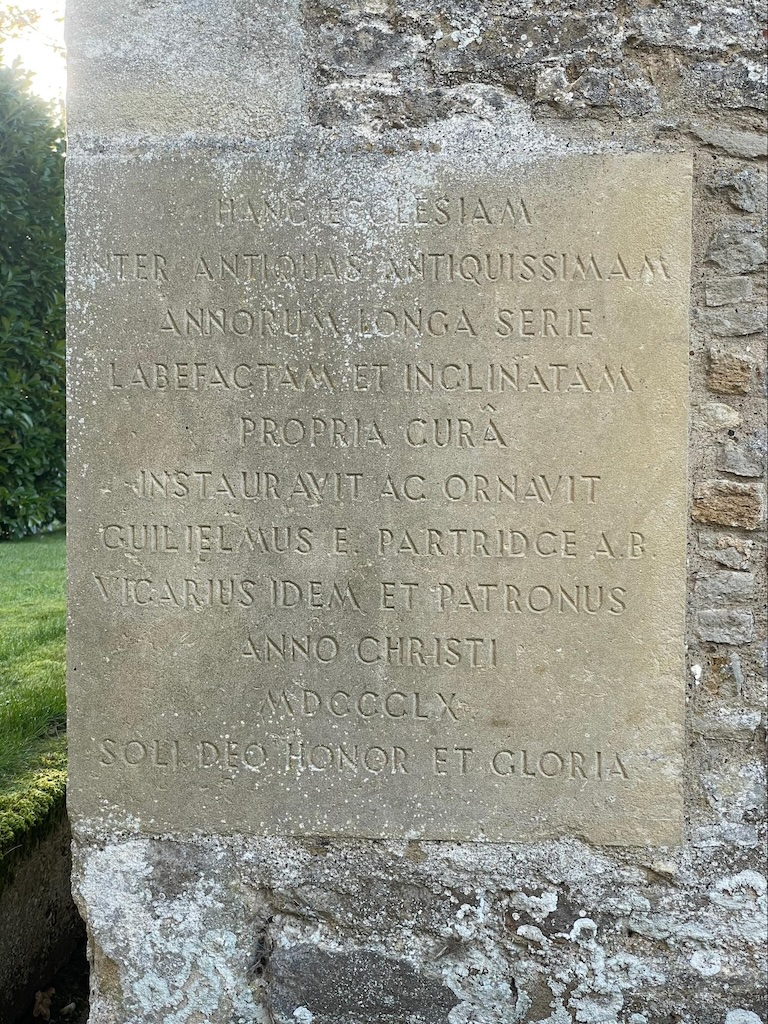 1860 commemoration stone on North wall
The commemoration stone on the North wall (replaced 1983), has an inscription written by Reverends Partridge and Faber (Saunderton), the brother of hymn writer F Faber. Translated from Latin, it reads:
This church among the most ancient by length of years seriously weakened and decayed at his own proper charge restored and furnished William E. Partridge B.A. vicar of the same and patron in the year of Christ 1860. To God alone be the honour and the glory.
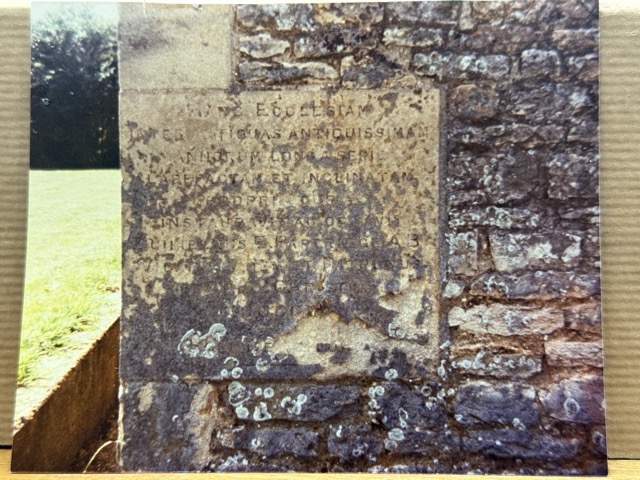
In 1983 during replacement of the inscribed stone, erosion of the final sentence required research into the probable final words. Local historian Rex Kidd approached the Bodleian Library for advice. Molly Barratt from the Department of Western Manuscripts responded[4] that it likely ended HONOR ET GLORIA. The new tablet cost £386+VAT.
Rev Partridge had purchased Horsenden House in 1848 and purchased the Ilmer benefice from George Stanhope, 6th Earl of Chesterfield in 1858 which enabled him to fund its repair in 1860. Five years later in November 1865, the Church Living was united with Horsenden.
Church warden at the time was Mr Richard Belgrove, farm tenant of Upper Farm also known as Ilmer Farm, on the site of the present day Ilmer House and nearby barn conversions.
Following his work for the diocese, George Edmund Street went on to design The Law Courts on London’s Strand.
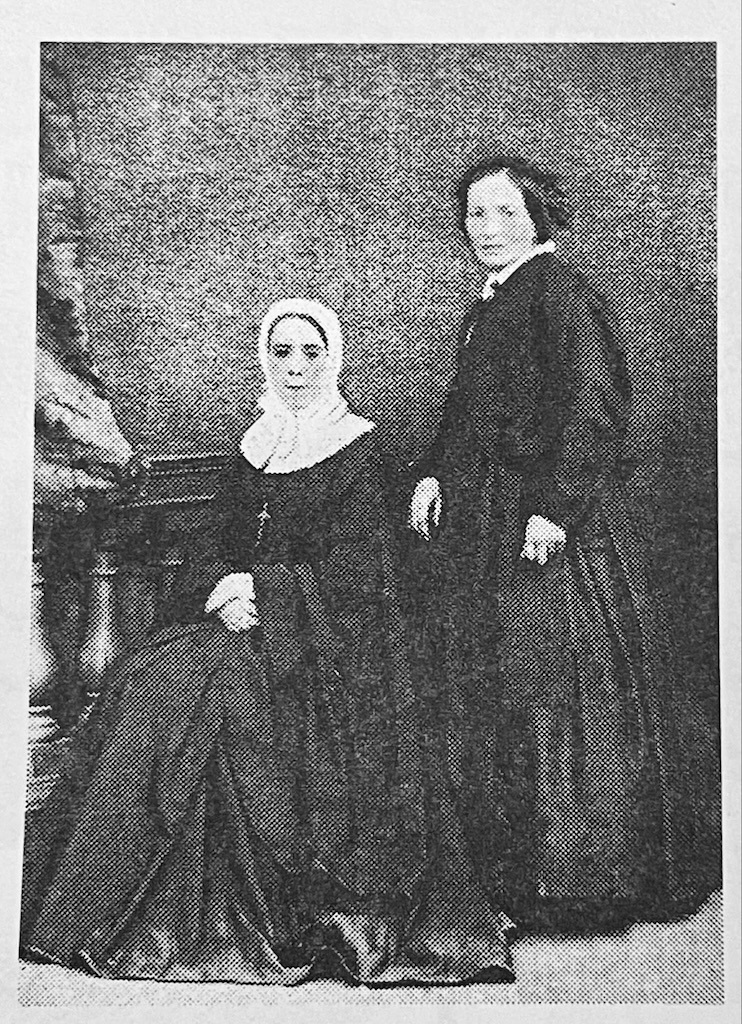 Sister Elizabeth Moreton[5]
Sister Elizabeth Moreton's contributions
Thirty-three years later, in 1893, the church underwent additional restoration, which included repairs to the roof, rehanging of the bells, and reboarding of the belfry. Furthermore, an iron fence was erected around the churchyard. Thomas Wright of Risborough executed the work under the supervision of Mr. Carter from Marlow. The funding for these restorations was provided by the local landowner, Miss Elizabeth Moreton - a nun and one of the early Sisters of Mercy at Clewer, near Windsor. At that time, the vicar was Reverend John Ormond. To commemorate the completion of the work, the Bishop of Reading delivered a sermon on the 8th of October, 1893.
In 1907, Miss Moreton once again supported the community by donating a new Parish Room located adjacent to the old vicarage. This has variously been described as a Mission Room or Village Hall. To celebrate the opening, a tea party was held on Thursday, 17th January. The Reverend John Edwin Varley, who had assumed the role of vicar in 1898, subsequently hosted a concert and expressed gratitude to Miss Moreton for her generous provision of the splendid room. The parish was indebted for £10 for a piano, and the proceeds from the concert were allocated towards settling this debt.
A new spire
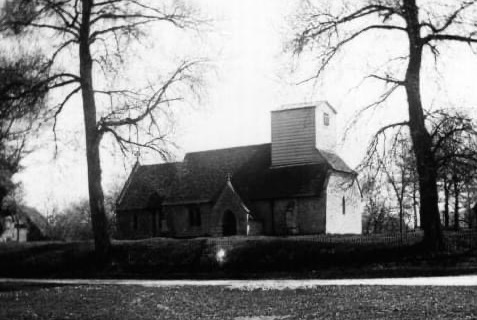 St Peter's, pre-1909, without spire[6]
During the tenure of Reverend Varley, it became known that the church once boasted a spire which had since deteriorated and was either collapsed or removed. The wooden belfry was deemed unsightly not only by the vicar but also in Kelly's Directory of 1899, the forerunner of yellow pages.
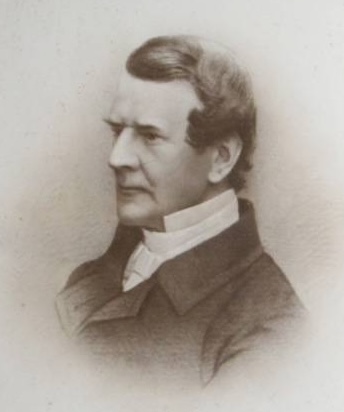 John Oldrid Scott[7]
In February 1909, Architects John Oldrid Scott and Son (Charles Marriott Oldrid Scott) of Dean’s Yard, Westminster were given faculty to design the replacement spire and remove the half-hip roof to complete the west gable. John Oldrid Scott was the grandson of Sir Gilbert Scott, architect of the Albert Memorial. He had completed the stone steeple of St Mary’s, Risborough the previous year, which had replaced an older zinc-covered wooden structure.[8]
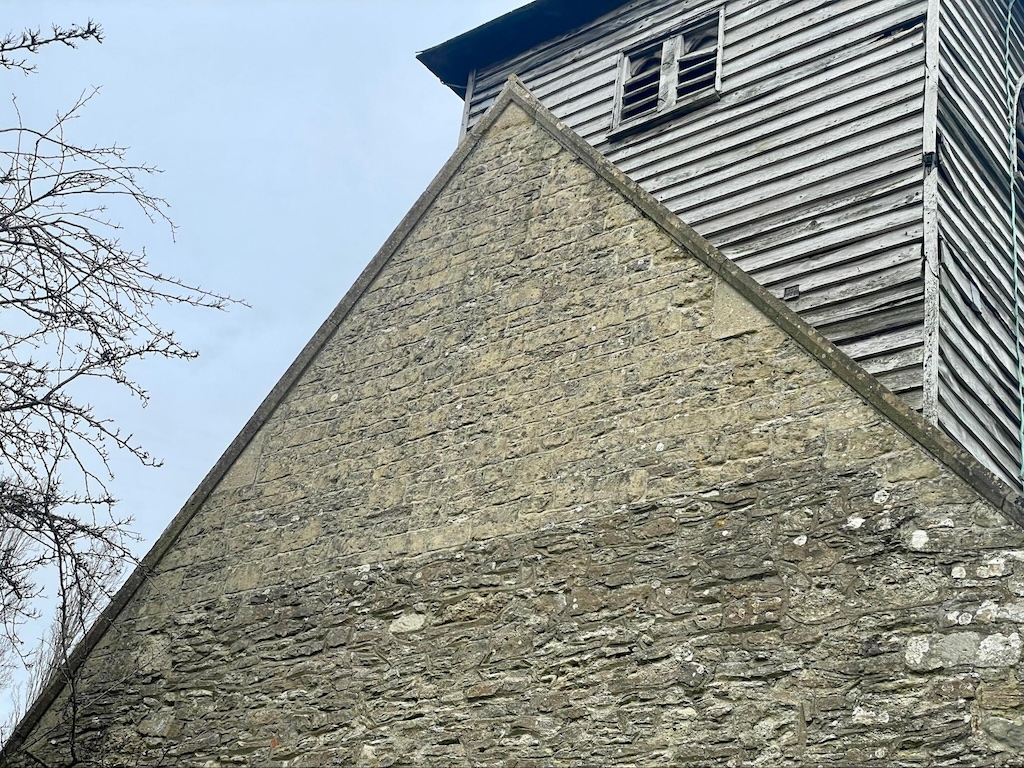 Stonework showing where the Half Hip roof was converted to a full gable end
The construction was entrusted to Franklin's of Deddington, a firm of masons and woodcarvers located just south of Banbury in the town of Deddington. Throughout its approximate fifty-year history, Franklin's, which specialised in the restoration of churches and colleges, had at one point employed 200 people.
During the work, they discovered the main timbers were inches out of alignment and the support structure for the bells was in serious risk of collapse. It was fortuitous the work was undertaken at that time and failure of the building integrity was averted. In removing the belfry, the “matrice” holes of the original spire were rediscovered.[9]
This wasn’t the first time the church had been in a perilous state. A visit by Bishop Williams of Lincoln in 1637 reported that “The steeple to be repaired in the whole”. St Peter’s church is curious in that the spire and belfry are supported on an oak internal structure visible from inside the church rather than being rested upon the masonry and walls.
In order to pay the £300 (some reports say £350) cost for the new spire, rebuilt belfry and western wall, the parish undertook a fundraising effort in early 1909, including:
On Monday 15th February, a packed Parish Room was the venue for singing of a Sleeping Beauty cantata.
On Tuesday April 20th, the Parish Room was again used for the Girls’ Club concert in aid of the Church Restoration Fund. The children sang a variety of songs, danced and performed on the violin, piano and mandoline[sic].
On Thursday 29th April at 3.30pm in the Victoria Club, Kingsbury, Aylesbury, Myra Varley, the wife of the vicar, Rev J. E Varley, gave a ticketed Elocutionary Recital accompanied by Juliet Brooks on piano solos and Marion Godfrey, a soprano. The church was described during the event as containing 100 seats for 50 people so they could sit fairly comfortably.
By Wednesday, June 16th, donations totaling £200 had been received, with a remaining £100 needed. To this end, a 'Rose Fête' was held at the Horsenden Rectory, as reported by the Bucks Herald. The stalls, adorned with roses, sold sweets, refreshments, teas, flowers, rummage, and featured a bran dip. Lady Susan Trueman, a notable anti-suffragist, was invited to inaugurate the fête and was presented with a basket of roses for her participation by the vicar's son. The entertainment lineup included an orchestra from Aylesbury, evening dances, a play of 'Beauty and the Beast,' a tennis tournament, pony and donkey races, and, of course, a Punch and Judy show. The fête extended into the next day with an auction. This event successfully raised £40, leaving a modest £60 yet to be sourced.
Miss Moreton contributed a sum of £100 to the fund. She died in 1912 resulting in the farm and land held by her, Manor Farm, Lower Farm and Coldharbour Farm, passing to Eleanor Carter née Frewen, who then sold them.
The Bishop of Oxford officiated the dedication of the church on Saturday, June 26, 1909, at 3 pm. Just before the ceremony, a heavy rain shower struck Ilmer, causing some attendees to seek shelter under the newly constructed railway bridge. An attendee remarked to the Bucks Herald that, while waiting on the churchyard path, parishioners had noted, "You be a stranger in these parts, sir." The stranger had come from Aston Sandford.
A Union Jack and other flags were displayed outside the Parish Room where parishioners gathered before the service. The church wardens at the time were R. Belgrove and F. W. Kingham. During the dedication of the spire and belfry, the Bishop remarked on the chancel window-seat sculptures of mysterious origin, depicting St. Christopher carrying a child across a stream and the Crucifixion. The Bishop dedicated the church, saying, "By virtue of our sacred office, we now declare this belfry and spire to be duly dedicated as a bulwark of this Church, and forever set apart from all unhallowed uses." Clergy from Aylesbury, Bledlow, Kingsey, Haddenham, and Aston Sandford were also present. The Bishop received cheers upon his departure. Tea was served in the Parish Room afterward. Appropriately, St. Peter's Day was to be celebrated the following Tuesday. [10]
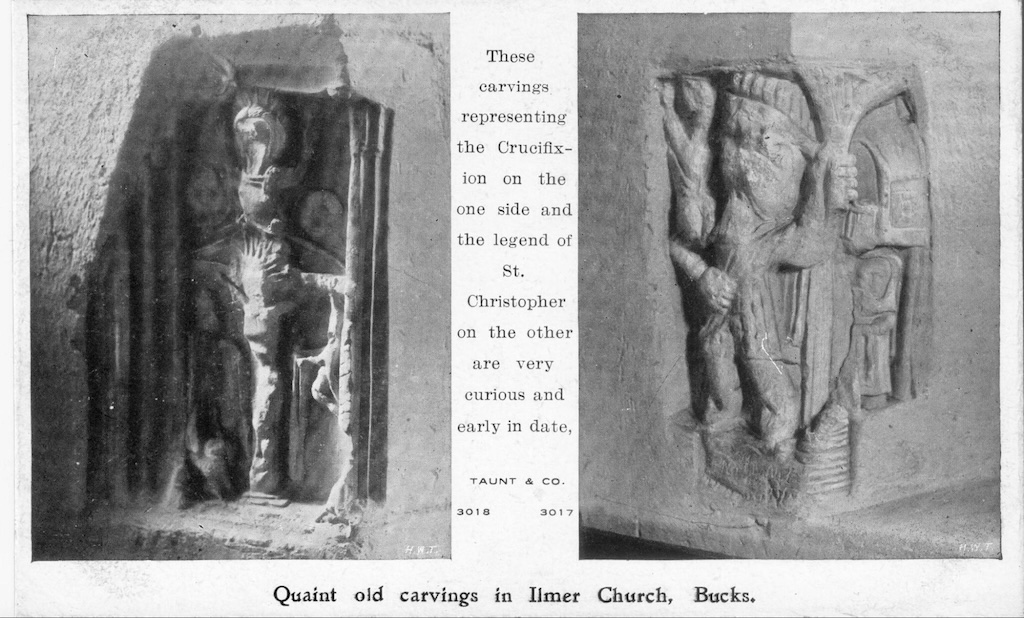 Old postcard showing chancel carvings. Photos are pre-1910[11]
Heating and lighting
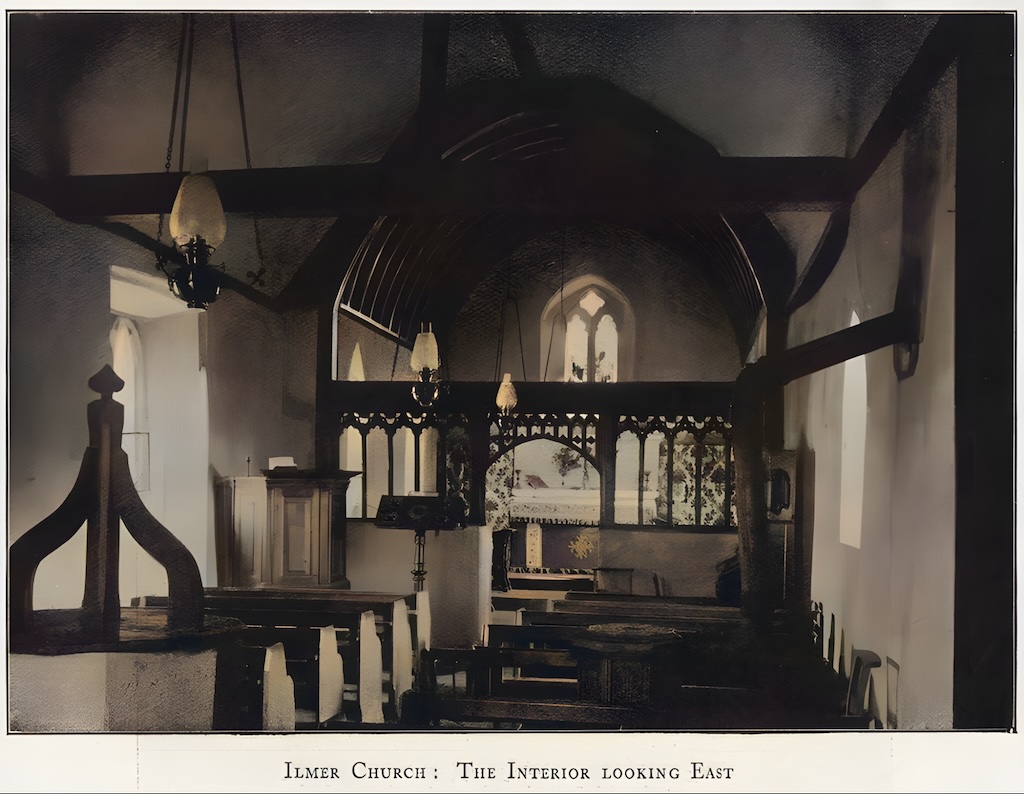 Colourised ~1915 photo of the church interior, showing the stove and flue[12]
A photograph of the period shows a small stove installed in the nave with flue exiting the building approximately where the war memorial plaque was later installed. Aerial photographs from 1948 show a chimney exiting the tiled roof in alignment with a butress. A prominent stone, previously painted, can be found in the exterior south wall possibly indicating other work connected with the flue. Curiously, a second small chimney is also visible on the 1948 photo on the south of the chancel adjacent to the rood screen. Work to repair these chimneys was undertaken in 1939[13]
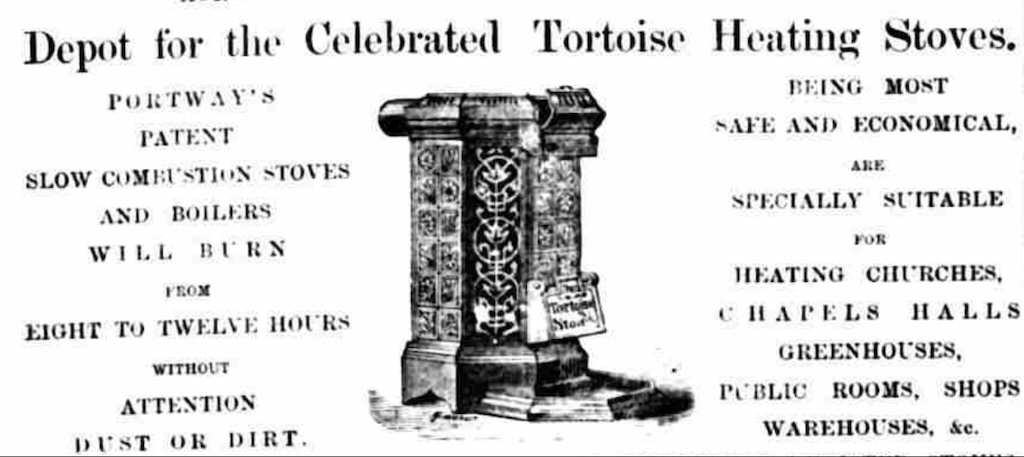 Advert for a stove similar to that photographed in Ilmer church[14]
At the time, lighting was provided by pendant oil lamps. When electrification came, the oil lamp saddle was inverted and instead of the ceiling chains being attached to the fleur de lys, now an electric light dangles from each of the three fleur de lys and the ceiling chains were re-attached to the central ring of the saddle.
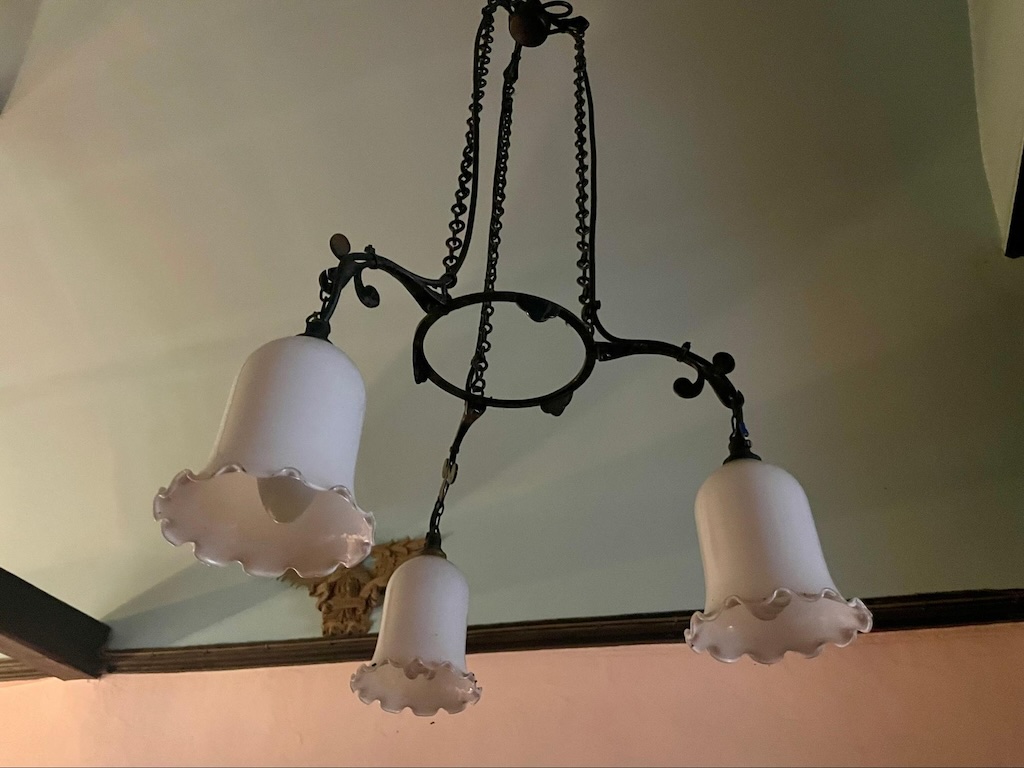 Oil lamp converted to electric using the repurposed oil lamp saddle
In 1924, a proposal was made to lay electricity lines to Ilmer[15] and a faculty granted in 1928[16] to install electric lighting in the church however power was supplied at this time from the generator at Ilmer House[17] courtesy of owner Albert Goodchild. The 1931 vestry minutes held in January 1932 and October 1932 record the cost of the electricity now charged using a slot meter following the death of Albert Goodchild the previous year.
Church accompaniment
The church was described in 1860 by Shehan as having a harmonium. A pre-1912 photograph shows an organ resembling a harmonium or reed organ. In 1959, a newspaper advertisement[18] offered a walnut pedal organ for sale from the church. The manufacturer was said to be the Chicago Cottage Organ Co, which produced organs with a significant resemblance to the pre-1912 photograph. Martha Belgrove played the organ for many years until her death in 1909. A window in the church was later dedicated to her memory.
Memorials
In November 1919, the vestry minutes record the decision to erect the war memorial tablet on the south wall of the nave. The faculty was granted on 13th January 1920 and it was duly erected the same year.
The stained glass in the nave's north wall, known as the Pulpit Window, features the parable of the Good Samaritan and serves as a memorial to Mary Clara Jacques (1849-1932), daughter of the former vicar, Reverend W. E. Partridge. A meeting held at the Parish Hall on Tuesday, October 25, 1932, chaired by Reverend A. M. Berry, resolved to install the window in her honour to commemorate her charitable deeds. Contributions were received from both within and outside the parish, with no additional fundraising activities undertaken. The cost was projected at £70. Joseph Edward Nuttgens of North Dean crafted the window, which was installed in February 1933.
The opposite window, installed 1991, on the south wall of the nave is by his son, Joseph Ambrose Nuttgens[19]. This was a gift from an anonymous resident of Longwick[16:1].
Repairs and redecorations
In 1940, the Parish Room needed redecorating which was undertaken by Frank Rogers of Longwick. The exterior was painted green, the interior white and mantlepiece brown. The receipt for work was addressed to Mr W Harper, a parish councillor and father of long-time Ilmer resident George. [20]
The wartime activities didn't escape Ilmer, as in 1942, 7 soldiers slept overnight in the parish hall and plans were made for the event of an invasion whereby the parish room would be used as a mortuary[21].
In the late 1960s, redecoration and reconstruction work of the church, amounting to £1,000, was carried out, funded by the parishioners. In particular, the 1964 installation of an oak communion rail made by Ivor Newton of Haddenham[16:2].
By 1978, the spire required new shingle tiles, and the tower and bells were in need of restoration. Consequently, a fundraising campaign was initiated in January of that year, and within two years, £8,000 had been raised. The bells were restored by Whites of Appleton during 1981[16:3] and at this time they were converted to swing chiming. The cost was £1,790+VAT [22]
In 1993, the base of the octagonal font cover was replaced with 19th century oak[16:4].
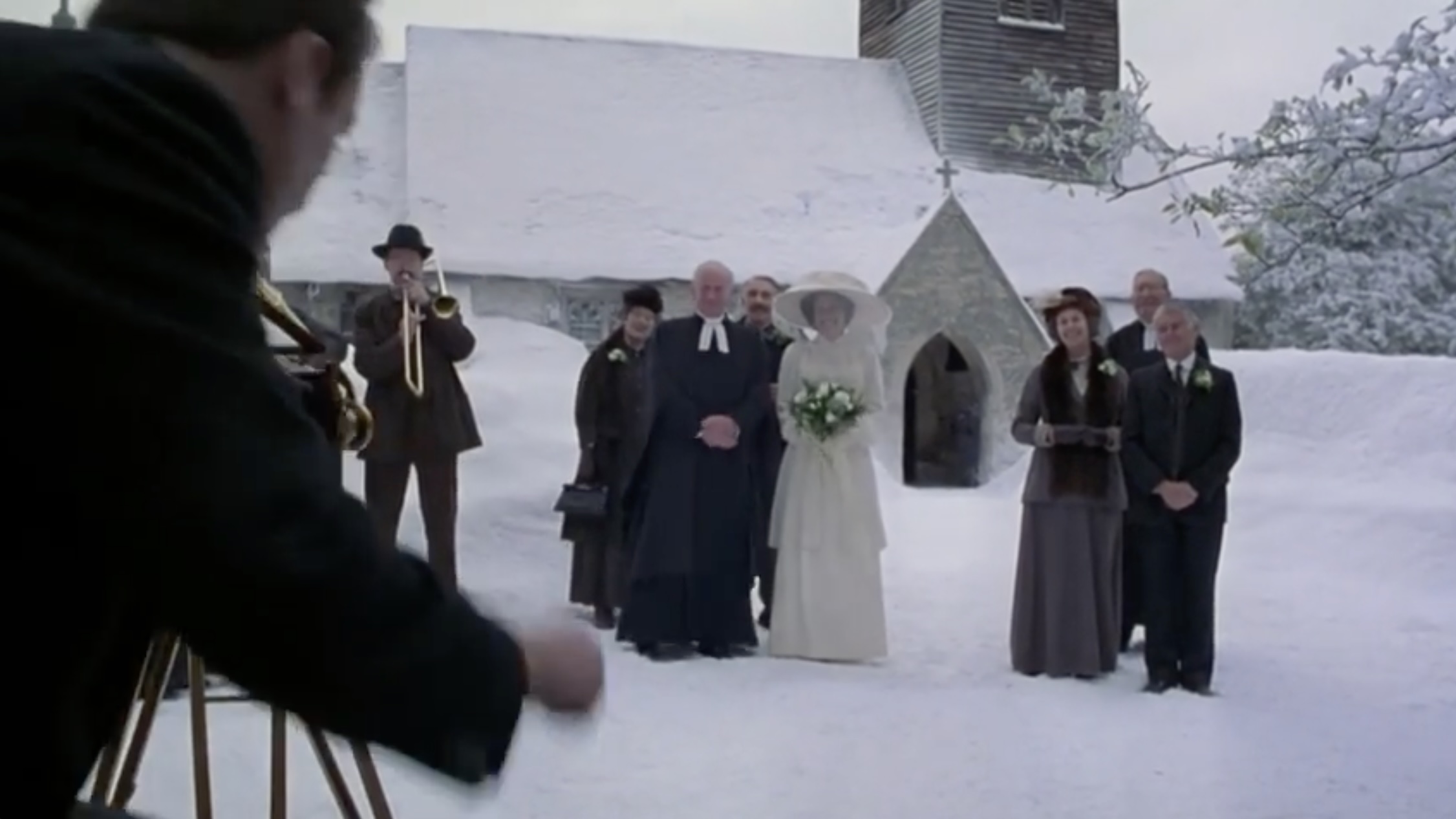
The Church was used for the opening scene of the 1996 film Photographing Faries and received £500[16:5]. St Peter's doubled as a Swiss alpine church surrounded by snow. Since filming took place in July, this necessitated white sheeting and theatrical spray snow to accomplish the shot.
Bench Mark
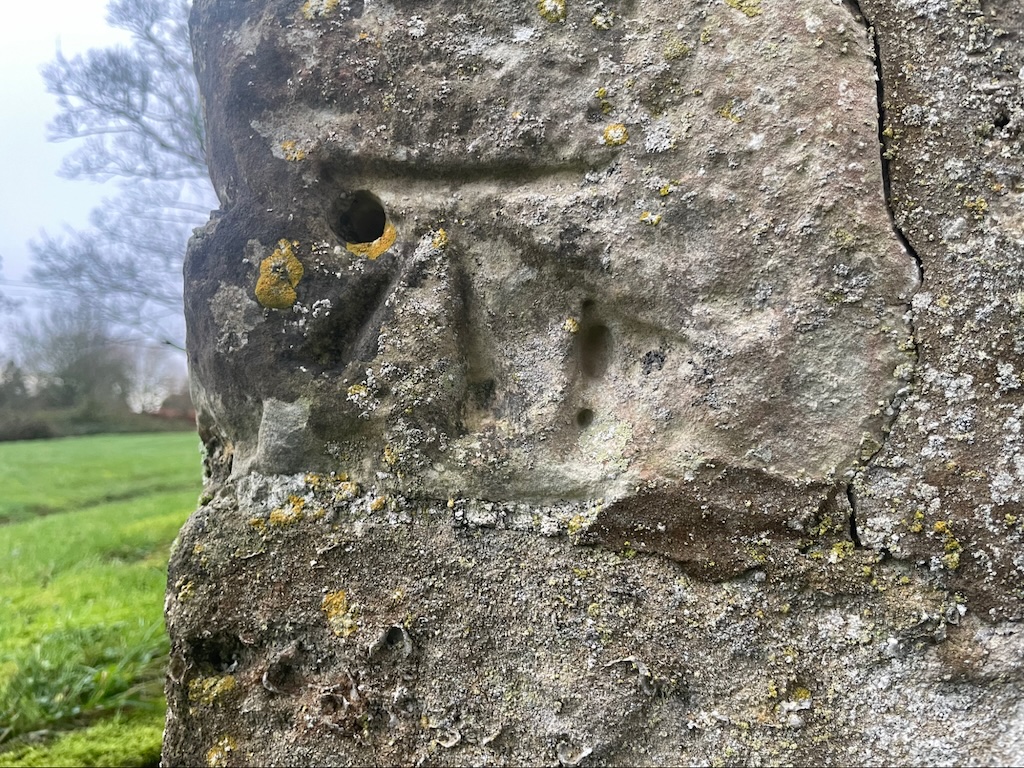 Ordnance Survey Benchmark
The North West corner of the church exterior has a carved Ordnance Survey Bench Mark - composed of a horizontal cut datum line over a crow's foot or pheon arrow. This is one of the ½ million bench marks across the UK which, until 1993, were used to record height above sea level. This Bench Mark is at 85.7m above sea level. Ilmer has a second Bench Mark at the south west of the railway bridge. Other nearby Bench Marks are at Ray Farm and on Mill Leys, near the assumed historic site of the Domesday-recorded water mill, adjacent to the bridleway towards Towersey. This last Bench Mark no longer exists.
Ilmer Church, pre-1909, without spire. Copyright Sydney Newton until 2031. ↩︎
Church bell inscriptions. Source: The church bells of Buckinghamshire, Cocks, 1897 ↩︎
Rood screen renovation. Source: Bucks Herald, 26 Jun 1909 ↩︎
Source: Oxford History Centre, DIOC/1/C/5/1587. ↩︎
Sr Elizabeth CSJB and an unknown companion. Source: A Place in Life, Valerie Bonham, 1992 ↩︎
St Peter's without spire. Source: Unknown ↩︎
John Oldrid Scott. Source: gilbertscott.org ↩︎
Basic book-keeping details are available in the RIBA Scott archive currently held in the RIBA Study Room at the V&A. Item ScJO/1-3 - Account books and papers of John Oldrid Scott, 1873-1916. These show 3 interim payments during the course of 1909 towards the full cost indicated as £350. ↩︎
Discovery of a pre-existing spire. Source: Bucks Herald, 19 Jun 1909 ↩︎
Church dedication. Source: Bucks Herald (topical notes article and also supplement), 3 Jul 1909 ↩︎
Henry W Taunt postcard. Original photos also found in A pretty corner of leafy Bucks. Princes Risborough, and round it by Henry Taunt, 1910. ↩︎
Colourised photo of the church interior, showing the stove and flue. Source: VCH Bucks, vol 4 ↩︎
Approval to repair the church's chimney. Source: Vestry Minutes, 12 April 1939 ↩︎
Advert for a stove similar to that photographed in Ilmer church. Source: East Kent Gazette, 4 Jan 1890. ↩︎
Source: London Gazette, 16 Dec 1924 ↩︎
Source: St Peter’s Church, Ilmer, History and Events, Janet Wilson, 1999 ↩︎ ↩︎ ↩︎ ↩︎ ↩︎ ↩︎
Source: Vestry Minutes, Bucks Archives ↩︎
Source: Bucks Free Press, 17 Apr 1959 ↩︎
Stained glass windows. Source: buckschurches.uk ↩︎
Invoice for work. Source: Bucks Archive, PR/114/87. ↩︎
Use of Parish Room for overnight refuge and use during invasion. Source Vestry Minutes 8 April 1942 and 28 April 1942. ↩︎
Letter from Whites dated 7 Aug 1980. Source: Oxford History Centre, DIOC/1/C/5/1587. ↩︎